Nigeria’s electricity sector is in crisis. The grid frequently collapses, tariff policy is murky, and corruption has deeply weakened the system. But there are real fixes — if we push for the right reforms. DeKing Charity Foundation is committed to educating people, demanding transparency, and mobilizing for change.
This article is a follow up of this post The True Cost of Light: Why Nigerians Pay More Than They See – Part 1 and this post, Metering, Estimated Billing & Your Power Bill: What You Need to Know
A Brief History: How Nigeria’s Power Sector Got Here
To understand today’s mess, we need to go back a little:
- NEPA Era: Before privatization, electricity in Nigeria was managed by a state-owned company called NEPA (National Electric Power Authority). Many Nigerians remember frequent outages and billing problems, but at least there was a single, predictable structure.
- Privatization (2013): NEPA was broken into several government-owned companies first, then privatized. Distribution companies (DisCos), generation companies (GenCos), and the transmission company (TCN) were handed to private or partially private firms. The aim was to improve efficiency and investment.
- Unmet Expectations: But many of the promises of privatization — reliable service, massive investment, efficient billing — have not been fully realized. In fact, despite billions in investment, many Nigerians still deal with grid collapses, billing fraud, and erratic service.
Why the Grid Keeps Falling Apart
Here are the real technical and systemic reasons behind Nigeria’s fragile power grid — explained simply:
A. Aging Infrastructure & Maintenance Gaps
- Transmission lines in many places are decades old. Regular maintenance has not kept up.
- Substations and transformers are often overloaded. When demand spikes, they fail.
- Vandalism and theft are rampant: vandalized cables, stolen equipment, and unprotected substations make things worse.
B. Capacity vs. Reality
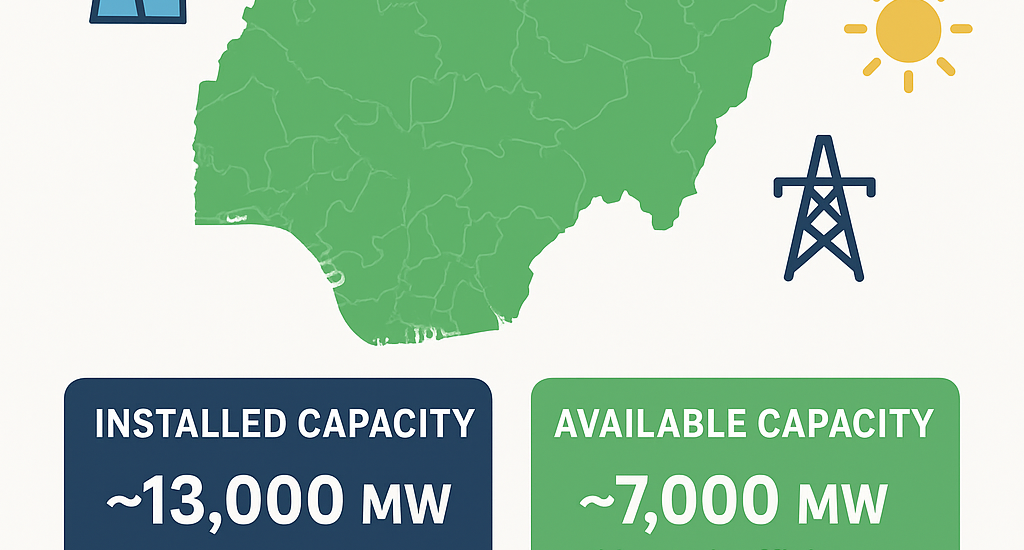
- Nigeria can generate more power than is reliably delivered. But because of transmission losses and inefficiencies, not all that capacity reaches homes.
- Peak demand often outstrips what the system can reliably deliver, leading to frequent grid dropouts (“collapses”).
- In a Reuters analysis, grid issues were linked to under-investment and poor maintenance over the years.
C. Losses & Revenue Leakages
- As mentioned in Article 1 and 2, ATC&C losses (technical + commercial + collection) are huge. Some DisCos report loss rates of 35–40%.
- Theft, illegal connections, and poor billing practices mean much of the electricity that is produced is not properly paid for.
- These losses are not just a technical issue — they erode trust, reduce cash flow, and make it hard for the sector to reinvest in itself.
Corruption & Governance Problems: The Invisible Costs
Corruption is not just about embezzlement — it’s woven into how the entire power sector functions. Here’s how:
- Procurement corruption: Some contracts for power infrastructure (lines, transformers, meters) are awarded at inflated prices or to connected companies.
- Metering fraud: In some cases, meters are “provided” but not installed correctly; or customers are charged for meters they never received.
- Regulatory capture: Regulatory bodies like NERC are supposed to protect consumers, but there are criticisms that some regulatory decisions favor DisCos or GenCos over ordinary Nigerians.
- Subsidy and tariff manipulation: While tariffs are meant to reflect real cost (cost-reflective), in practice, various “interventions” or adjustments muddy the water, making it less obvious what customers are paying for.
Economic & Social Impact: How the Crisis Hurts Everybody
For consumers:
- High cost of electricity: Because of the inefficiencies and losses, tariffs go up, and many Nigerians pay more than they should.
- Dependence on generators: When grid power fails (or is unreliable), households rely on diesel or petrol generators — very expensive in fuel and maintenance.
- Health risks: Generators produce fumes; in poorly ventilated spaces, they are dangerous.
For businesses:
- Economic burden: According to a World Bank analysis (reported in Nigerian business media), erratic power supply costs Nigerian businesses an estimated US$29 billion annually in lost revenue and generator costs.
- Investment deterrent: Potential investors are scared off by unpredictable electricity — infrastructure risk is now a business risk.
- Productivity loss: Factories, shops, and offices waste time and money dealing with outages, making them less efficient.
For the nation:
- Debt cycles: Because DisCos don’t always collect enough revenue, they struggle to invest, which limits the sector’s growth and contributes to repeated bailout demands or appeals for government intervention.
- Inequality: Those who are already poor or live in underserved areas suffer more — they may pay more, get less, and have less voice in policy.
- Environmental cost: Heavy use of diesel generators contributes to pollution and carbon emissions.
Real Reform Paths: What Needs to Change — and How
All hope is not lost. Here are real, strategic reforms that can help fix the sector — and how citizens (with DeKing Charity Foundation’s help) can push for them:
A. Strengthen Regulation & Transparency
- Stronger NERC enforcement: Regulatory decisions must be fair, transparent, and in favor of consumers, not just companies.
- Public reporting: DisCos should publish quarterly reports on losses, meter deployment, and finances in a way that ordinary people can understand.
- Independent audits: Use independent bodies or civil society to audit DisCo claims about costs, losses, and investments regularly.
B. Improve Metering & Billing
- Accelerate NMMP, MAP, and MAF: These metering programs must be effectively scaled — not just planned.
- Enforce metering deadlines: Regulators should hold DisCos accountable for promised meter deployment.
- Digital billing tools: Use mobile apps and SMS systems to send real meter readings (or photos) to consumers, so there’s less guesswork.
C. Invest in Infrastructure
- Upgrade transmission lines: Replace old lines, expand capacity, and properly maintain substations.
- Grid resilience: Use smart-grid technology, remote monitoring, and sectionalization so that a line fault doesn’t collapse the entire grid.
- Prevent theft and vandalism: Better security, community engagement, and public-private partnerships to protect infrastructure.
D. Encourage Decentralized Power Solutions
- Mini-grids and solar: Promote community-owned or private mini-grids (solar, wind) especially in underserved or rural areas.
- Policy incentives: Tax breaks, grants, or soft financing for small-scale renewable projects can help communities reduce reliance on the national grid.
- Public-private partnerships (PPP): Use models where communities, businesses, and government co-invest in power generation or distribution.
E. Civil Society & Consumer Empowerment
- Advocacy: DeKing Charity Foundation can lead or support advocacy for more accountability in the power sector.
- Education campaigns: Workshops, radio shows, social media outreach to explain power sector realities to ordinary people (“Why your bill is high,” “Know your rights”).
- Community monitoring: Encourage local groups to monitor DisCo performance, meter deployment, and losses — and report publicly.
How DeKing Charity Foundation Is Part of the Solution
At DeKing Charity Foundation, our role is not just to point out problems — it’s to help fix them through education, advocacy, and community engagement:
- Creating awareness: We plan to run “Power Truth” campaigns — simple, clear explanations (in English and local languages) on how billing, metering, and tariffs work.
- Consumer training: Teach people how to read meters, calculate kWh, and raise complaints.
- Partnerships: Work with local governments, civil society, and tech partners to support meter roll-out and community power projects.
- Policy engagement: Advocate at the national level for stronger regulation, greater transparency, and fairer electricity reform.
What You, the Reader, Can Do
You don’t need to be an expert to demand change. Here are steps you can take now:
- Join or start a community consumer forum to monitor DisCo actions.
- Demand your DisCo publishes a simple, understandable report on its meter deployment, losses, and investment.
- Ask local leaders to push for mini-grids or community power—especially in places with poor supply.
- Support DeKing Charity Foundation’s advocacy: volunteer, share our educational materials, or donate so we can scale this work.
Final Thought: Power to the People Means More Than Just Light
Electricity is not just about convenience, it’s about dignity, economic opportunity, safety, and social justice. When power works, businesses thrive, kids study, and communities grow. When it doesn’t, the poor pay the heaviest price.At DeKing Charity Foundation, we believe that real change in the power sector starts with people who know their rights and refuse to accept the status quo. Together, we can demand a future where electricity is reliable, fair, and accessible for everyone.