A Case in Point: DeKing Group’s Struggle in Owerri
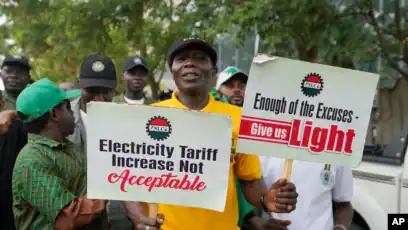
At DeKing Group of Companies, we recently faced a disruption that is becoming far too common for Nigerian businesses. In Owerri’s metropolis business cluster, the electricity company unilaterally reclassified all users into Band A — the highest tariff bracket. Overnight, our bill nearly tripled.
There was no proper communication, no consultation, and certainly no gradual adjustment. The reality was brutal:
- We were forced to rely on diesel generators at crippling costs, worsened by the removal of crude oil subsidies.
- Even when we tried to adapt, irregular supply persisted, eroding our planning and productivity.
- Eventually, the operators disconnected us outright, insisting we clear the entire inflated bill before reconnection or any negotiation.
This is not just inconvenient; it is inhumane and unprofessional. It is also the type of action that fuels resentment, risks clashes between communities and operators, and, tragically, sometimes leads to vandalization of power infrastructure — causing even longer outages and greater risks to lives and businesses.
Our experience illustrates the crisis Nigerian businesses face, and it is why DeKing Charity Foundation is using its platform to create awareness, document the problem with data, and propose solutions that can actually work.
The Bigger Picture: Nigeria’s Electricity Dilemma
DeKing’s case is not isolated. Across Nigeria, small and medium-sized enterprises (SMEs) are being squeezed by the triple challenge of:
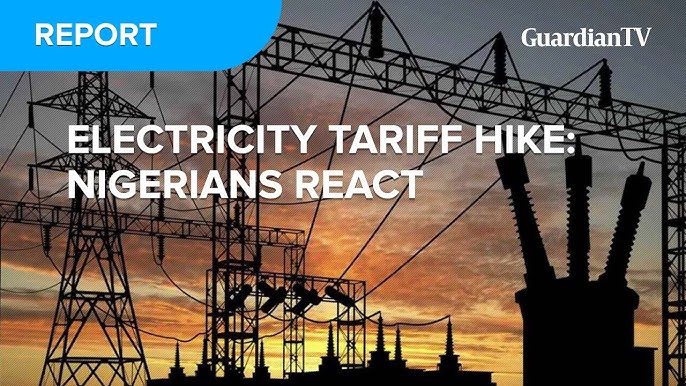
- Tariff shocks. In 2024, Band A tariffs spiked to over ₦206/kWh after subsidy reforms, compared to below ₦70/kWh for some users previously. For many SMEs, this represents unsustainable operating costs.
- Unreliable supply. Nigerian households face an average of 6.7 blackouts per week, each often lasting hours. Businesses cannot plan production schedules around such irregularity.
- Generator dependence. Manufacturers and SMEs collectively spent about ₦1.11 trillion on alternative power in 2024, mostly diesel and petrol. In Lagos State alone, MSMEs spend over ₦5.3 trillion annually on generator fuel.
This combination leads to higher prices for consumers, shrinking job creation, damaged equipment, and in some cases, outright closures of small businesses.
Why This Matters
When businesses like DeKing are forced to divert millions into diesel bills and unplanned tariff hikes, it is not just a private problem. It translates into:
- Lost jobs as employers cut costs.
- Reduced tax revenues for the government.
- Higher inflation as businesses pass costs onto consumers.
- Social tension as communities feel unfairly treated and abandoned.
Electricity, meant to be an enabler of growth, is increasingly becoming a burden.
What Needs to Change: Our Solution Framework
As an NGO, DeKing Charity Foundation does not only document problems; we are committed to pushing for practical, implementable solutions. Based on research and global best practice, here’s what can be done:
1. Protect SMEs from tariff shocks
Introduce a Productive-Use Tariff Window — allowing SMEs that use electricity for business operations to access a capped daytime tariff. This keeps businesses alive while still moving toward cost-reflective pricing.
2. Demand fairness and communication
No community or cluster should be reclassified without stakeholder engagement. DisCos must notify, justify, and phase tariff changes. Regulatory oversight must enforce this.
3. Fast-track metering for SMEs
SMEs cannot thrive under estimated billing or arbitrary disconnections. Priority metering, including third-party-financed meters, should be allowed.
4. Finance hybrid alternatives
Government and development banks should create low-interest credit schemes for solar + battery systems tailored for SME clusters. This reduces dependence on volatile diesel costs.
5. Build trust, not tension
DisCos must establish community liaison desks in markets and clusters. Instead of abrupt disconnections, engage in transparent repayment plans. This prevents vandalism and fosters cooperation.
Call to Action
Nigeria is at a crossroads. If nothing changes, more companies like DeKing will face disruptions, more communities will turn hostile, and the economy will bleed from lost productivity.
But with the right mix of policy reforms, fair tariff structures, and support for SMEs, electricity can once again become the foundation of growth rather than a source of pain.
At DeKing Charity Foundation, we are committed to continuing this research, raising awareness, and partnering with policymakers, businesses, and communities to build a sustainable solution.
Because electricity access is not just about light, it’s about livelihoods.